Homes that sold in Ford this spring spent an average of 32 days on the market before closing. The 31 homes listed for sale right now, as of August 2026, have already been sitting for an average of 46 days without a buyer, at a median asking price of $2.6 million. Read that as a slowdown and you'd be half right. Read it as one market cooling and you'd be wrong, because Ford has never really been one market. It's two, and the line between them runs straight down Lakeshore Road.
Most guides to this Southeast Oakville pocket treat Ford as a single, tidy submarket bordered by Maple Grove Drive, Royal Windsor Drive, Winston Churchill Boulevard, and the lake. That's geographically accurate and practically useless if you're trying to understand why one buyer is competing for a bungalow at $1.2 million while another is negotiating on a custom waterfront build well north of $4 million, both inside the same postal code.
Two neighborhoods wearing one name
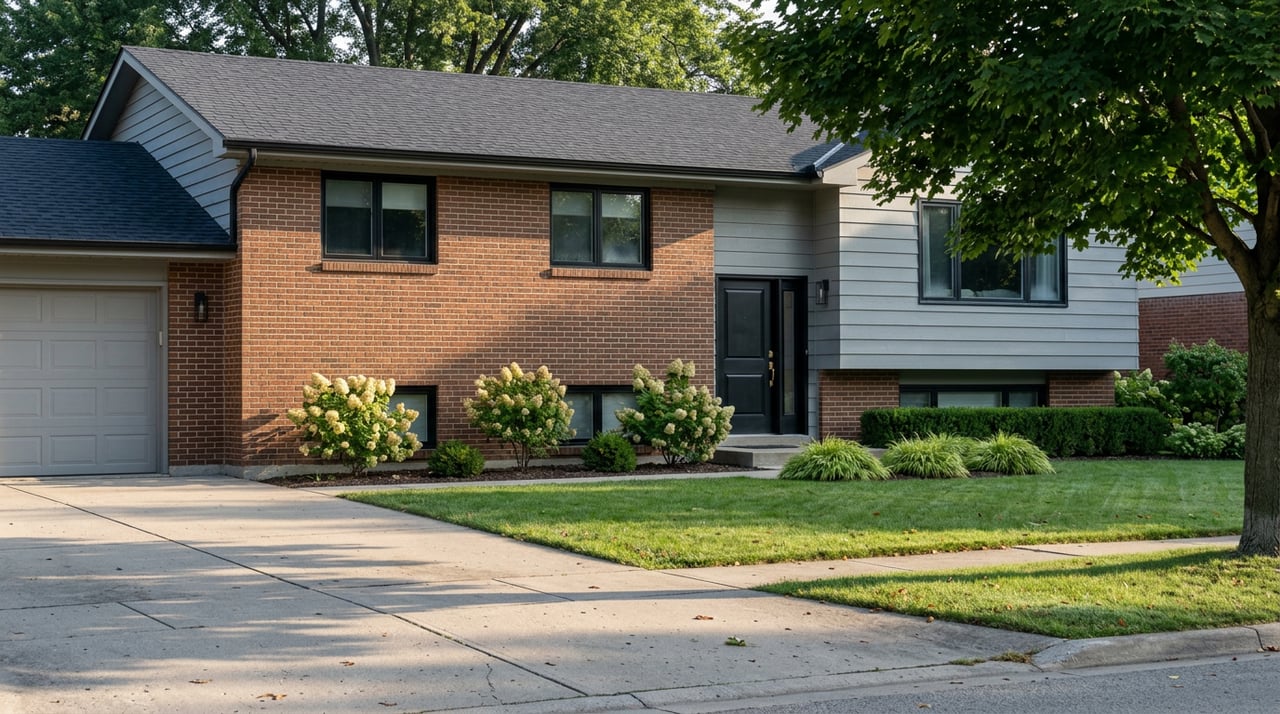
Ford sits inside a larger area real estate professionals call Eastlake, which also includes Morrison, its far more expensive neighbor to the west. Within Ford itself, the split shows up in the housing stock. North of Lakeshore Road, most of what's on the ground today was built during the 1960s and 1970s: bungalows, side-splits, and modest two-storeys on lots that were affordable enough, at the time, to give a working family a way into an Oakville address. South of Lakeshore, closer to the water, the homes get larger and newer, with custom builds and estate-scale lots that have little in common with the housing to their north beyond the FSA on the mailing label.
This isn't a story about one side being better. It's a story about two different buyer pools shopping for two different things under one neighborhood name, which is exactly why a single average price for "Ford" tells you almost nothing about what your money buys.
The landmarks that draw the line
Spend a weekend in each half of Ford and the split becomes obvious in how people actually live. North of Lakeshore, family life runs through Maple Grove Arena, which hosts public skating and hockey, and the Oakville Trafalgar Community Centre, with its aquatic centre, gymnasium, and indoor fitness centre. These are the amenities of a settled, kid-heavy pocket where a starter or move-up buyer is paying for community infrastructure, not a water view.
South of Lakeshore, the pull is the lake itself. Lakeside Park, with its sightline to the Oakville lighthouse, and Gairloch Gardens sit within reach, along with Lawson Park and a stretch of the Oakville Waterfront Trail. Buyers on this side are paying a premium for proximity to water and a lifestyle built around it, not for a hockey rink ten minutes away.
The plant Ford is named after is retooling
Here's the part almost no one connects back to housing values. Ford's name comes from the Ford Motor Company of Canada and the Oakville Assembly Plant that has anchored the area's economy since the neighborhood took shape in the 1960s. That plant, sitting along the QEW near Ford Drive, is in the middle of a $2.3 billion retool. It was originally slated to build electric vehicles and battery packs, then pivoted in 2024 to produce F-Series Super Duty trucks instead, with a new integrated stamping facility built by EllisDon, Walters Group, and Walbridge scheduled for completion in 2026. Once fully operational, the plant is expected to secure roughly 1,800 jobs and produce up to 100,000 Super Duty pickups a year, with production anticipated to start later this year.
Buyers relocating from outside the GTA often treat proximity to an auto plant as a mark against a neighborhood. In Ford, that instinct gets the story backward. The plant isn't an industrial neighbor tolerated in spite of the housing market. It's the reason the north side of Ford exists as an entry point into Oakville at all, and its return to production this year is a concrete, dated economic event landing in the same submarket that has always depended on it most. That's not a factor most neighborhood guides mention, because most of them are written from the outside looking in.
What the August 2026 numbers actually say
Put the two halves of Ford back together and the recent sold data reads differently than a single headline number suggests. In the second quarter of 2026, 29 homes sold across Ford at an average price of $2.4 million, or roughly $917 per square foot, closing at 96 percent of asking price after an average of 32 days on market. That's a market moving with confidence.
By August 2026, the 31 homes currently listed carry a median asking price of $2.6 million, or about $1,059 per square foot, and have been sitting for an average of 46 days with no buyer yet. That's not a closed-sale figure, it's a running clock on what's still for sale, but the gap against spring's 32-day close time is wide enough to be worth reading closely. Taken alone, it looks like buyer fatigue. Read against the north-south split, it more likely reflects a summer inventory mix skewed toward the higher-priced, slower-moving south-of-Lakeshore estates, the kind of homes that always take longer to sell regardless of season, while the north side's more affordable stock continues to move closer to its spring pace.
The takeaway for anyone shopping Ford this fall: don't price your expectations off the neighborhood average. Ask which side of Lakeshore Road a listing sits on, and price your comparison against that half of the market specifically.
| North of Lakeshore | South of Lakeshore | |
|---|---|---|
| Typical era built | 1960s to 1970s | Later infill and custom builds |
| Housing style | Bungalows, side-splits, two-storeys | Larger custom and estate-scale homes |
| Primary local anchor | Maple Grove Arena, Trafalgar Community Centre | Lakeside Park, Gairloch Gardens, Waterfront Trail |
| What buyers are paying for | An entry point into Oakville | Water proximity and lot scale |
FAQ
Does the Ford Assembly Plant affect home values in the neighborhood? The plant has been the area's defining employer since Ford took shape in the 1960s, and its current $2.3 billion retool for Super Duty truck production, with roughly 1,800 jobs expected once operations ramp up later in 2026, is a real and dated economic event tied directly to the north-of-Lakeshore submarket that grew up around it. It isn't reflected in the sold data yet, but it's the kind of employment anchor that supports steady demand at Ford's more affordable price points over time.
Is 46 days on market in August 2026 a sign the Ford market is slowing down? It's longer than the 32-day average from the second quarter, but the shift lines up more with which homes were listed than with a broad drop in buyer interest. South-of-Lakeshore estates typically take longer to sell than the neighborhood's bungalow and side-split stock, so a listing mix weighted toward that segment will push the average days on market up without necessarily signaling weaker demand across the board.
What's the real price difference between the two sides of Ford? The Q2 2026 average of $2.4 million across all of Ford, and the August median ask of $2.6 million, both blend two very different products. Buyers should treat any listing's location relative to Lakeshore Road as the first filter, before comparing it to a neighborhood-wide number that doesn't distinguish between a 1970s bungalow and a custom waterfront build.
If you're weighing a move into Ford, or trying to figure out which side of Lakeshore Road fits your budget and your list of must-haves, Rina DiRisio has spent decades reading Southeast Oakville street by street, not just neighborhood by neighborhood. Contact us to talk through what a specific address is really worth in this market.
